Something hurts
A comment, silence, memory, broken expectation, or unresolved conflict activates emotion.
SPEAKING • LISTENING • UNDERSTANDING
Communication can fail even when both people care. Pain changes tone. Fear changes meaning. Defensiveness turns explanations into arguments. The goal is not to win every sentence—it is to make understanding possible.
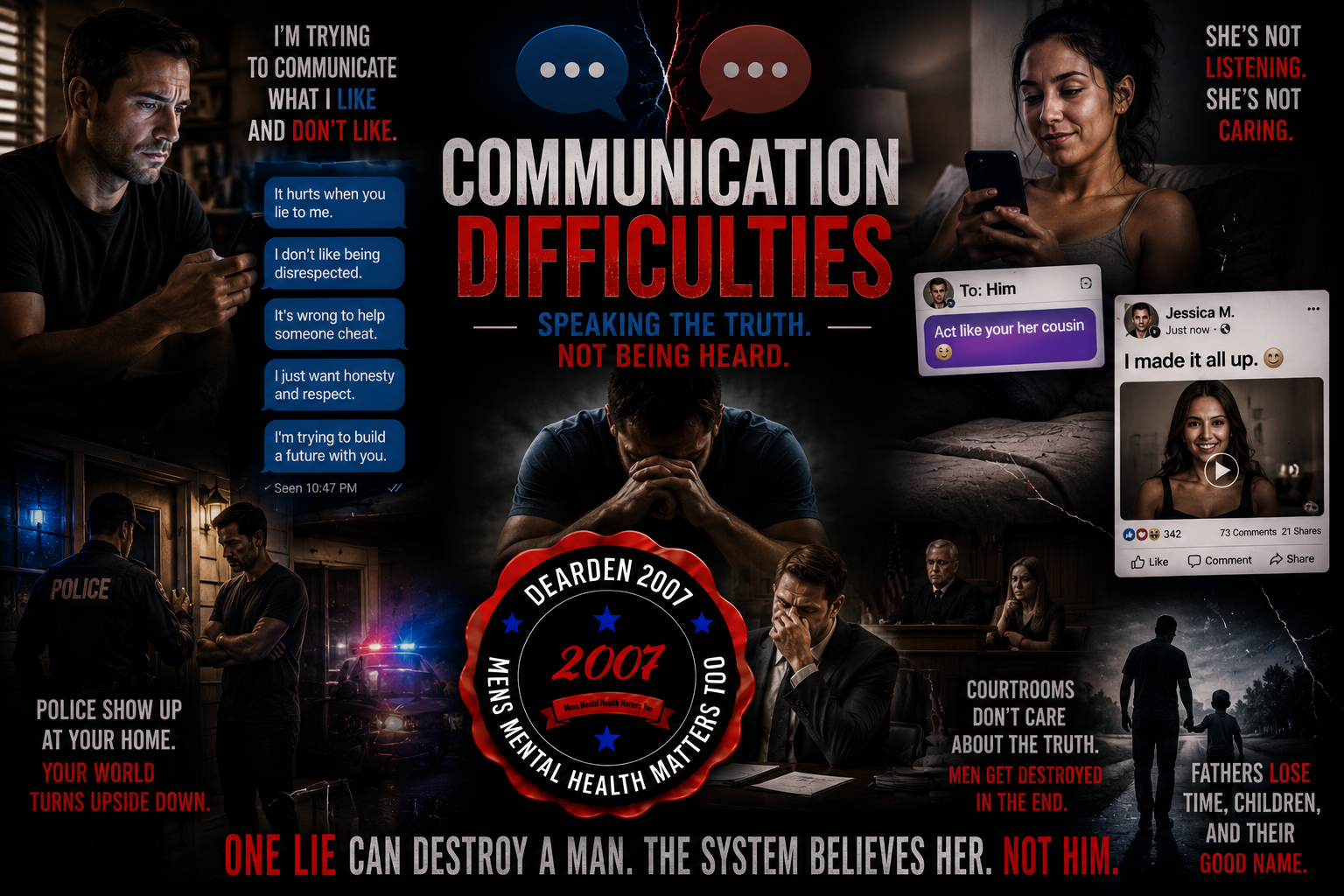
THE COMMUNICATION BREAKDOWN
One difficult moment can move through this entire chain in seconds.
A comment, silence, memory, broken expectation, or unresolved conflict activates emotion.
“I do not matter.” “I am being controlled.” “They are leaving.” “Nothing I do is enough.”
Blaming, defending, interrupting, withdrawing, raising voices, or sending rapid messages.
The argument becomes about tone and wording instead of the hurt, fear, or request beneath it.
WHAT RESEARCH AND PUBLIC-HEALTH GUIDANCE SHOW
These findings describe patterns—not rules about every man, woman, or relationship.
A controlled study found emotional disclosure increased perceived interpersonal closeness beyond sharing facts alone; men and women both benefited.
Read the studyResearch suggests social barriers to expression can be strongly connected with distress in men; willingness to speak is only one side of the conversation.
View the researchCDC recommends identifying emotions, using “I” statements, keeping a respectful tone, listening actively, and showing empathy.
CDC guidanceBEFORE YOU START
A serious conversation works better when the goal, timing, and request are clear. Decide whether you need listening, understanding, a decision, an apology, or a specific change.
Do not force ten old arguments into the moment in front of you.
“I want to talk about what happened last night.”
“I felt dismissed and disconnected.”
“I started believing my feelings did not matter.”
“Can we take ten minutes and listen without interrupting?”
USE THE WORDS
Adapt these scripts to your voice. Honest does not have to mean hostile.
“I am not asking you to agree immediately. I am asking you to understand what this felt like for me.”
“This matters to me, and I do not want to handle it badly. When can we give it twenty focused minutes?”
“I can feel myself preparing a defense instead of listening. Let me slow down and make sure I heard you.”
“What did you understand me to mean? I want to correct the message, not blame you for hearing it differently.”
“I will continue this conversation when we can speak without insults, threats, or yelling.”
“I do not need you to solve this right now. I need you to listen and stay with me for a few minutes.”
THE LISTENING LOOP
Do not write your rebuttal while the other person is talking.
“I heard you say that you felt alone when I left.”
“Did I understand that correctly, or did I miss something?”
Only after the meaning is clear, explain your experience or propose a next step.
PATTERNS THAT CLOSE THE DOOR
“You always ignore me.”
“I felt ignored when I did not receive a response.”
“Calm down. You are overreacting.”
“I can see this is intense. Help me understand what feels most important.”
Rapid-fire messages and repeated calls
One clear message, one request, and reasonable time for a response
Bringing up every past failure
Stay with the current event and schedule older issues separately
Silence as punishment
“I need thirty minutes to regulate, and I will return at 7:00.”
DIFFICULT IS NOT THE SAME AS UNSAFE
Threats, stalking, intimidation, violence, forced sexual contact, destruction of property, isolation, monitoring, and fear require a safety-focused response. Couples communication is not a substitute for emergency help or specialized support.
WHEN THE CONVERSATION GOES WRONG
Stop before more damage is added. State when you will return.
Name your part precisely without taking responsibility for everything.
Correct the message and ask what the other person understood.
Apologize for the harmful action, restate the need, and agree on one change.
TRUSTED STARTING POINTS
Prepare what you need, choose a trusted listener, and begin the conversation.
CDCPractical guidance for emotions, respectful expression, listening, and connection.
TREATMENTSearch for mental-health and substance-use treatment in the United States.
WHEN WORDS ARE NOT ENOUGH
In the United States, call or text 988. If danger is immediate, call 911 or go to the nearest emergency room.
YOUR VOICE MATTERS—AND SO DOES HOW IT IS CARRIED.
You do not have to find the perfect words before asking for support.
This page provides general education and is not relationship, legal, medical, or mental-health advice.