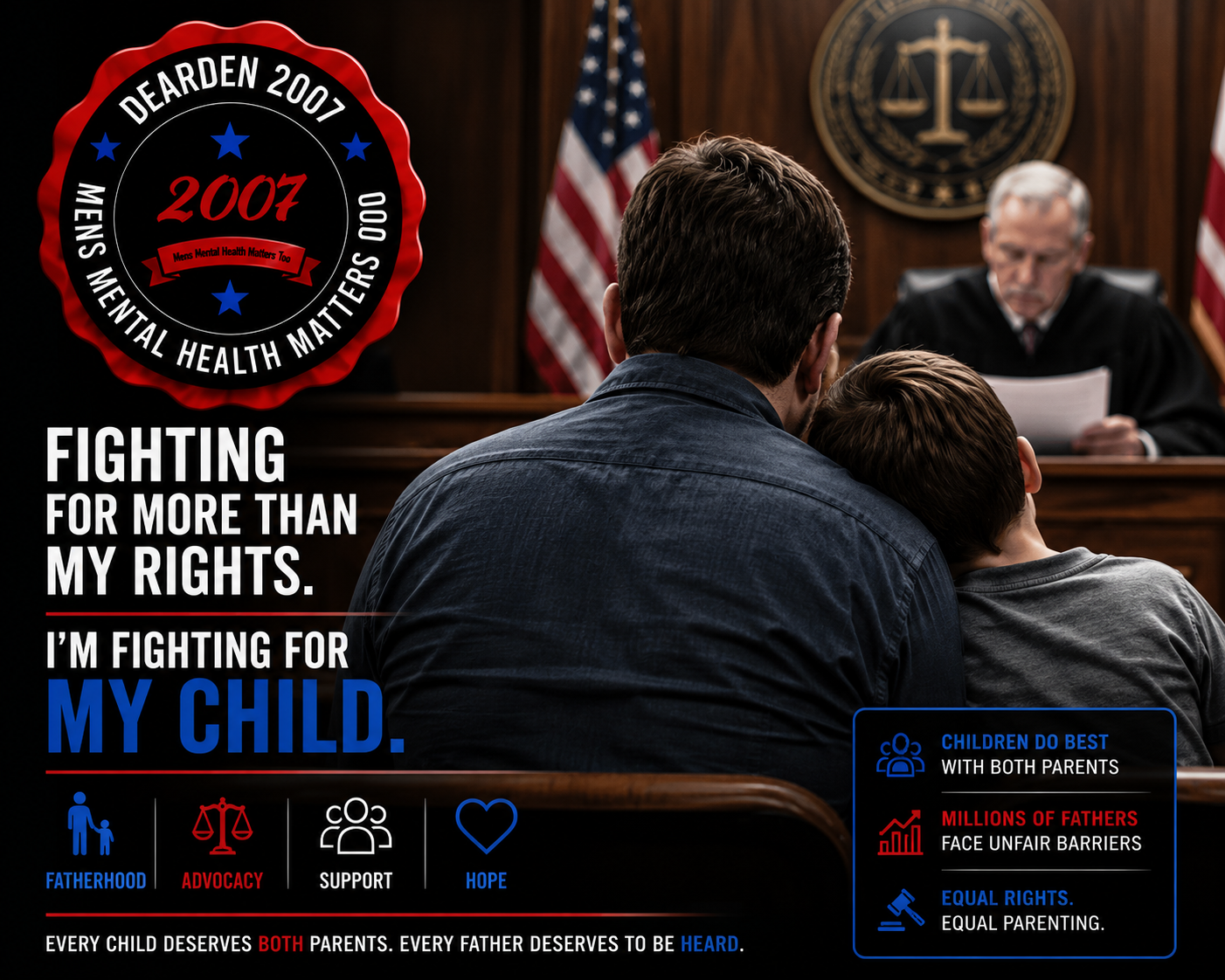


Changing a custody arrangement is not only a legal event. It can threaten a parent’s sense of stability, identity, relationship with a child, and control over the future—all while legal bills, deadlines, conflict, and uncertainty continue.
The authors argue that prolonged and highly conflicted custody proceedings can intensify emotional distress in parents. They call for stronger psychological assessment, less adversarial conflict management, and continuing support for both parents and children.
What this paper actually is
Published in the Journal of Forensic, Legal & Investigative Sciences in June 2024, the paper is a scholarly narrative review. It brings together earlier legal and psychological literature; it is not a newly reported clinical trial, survey, or experiment with its own participant sample.
That distinction matters. The article is useful for understanding themes across prior research and for discussing professional practice, but its statements should not be presented as if the authors personally measured every percentage or established that court proceedings alone caused every reported symptom.
The central findings
The review describes stress, anxiety, depression, anger, frustration, helplessness, and emotional exhaustion as recurring concerns in disputed custody proceedings. According to the authors’ synthesis, distress can be intensified by several overlapping pressures:
- long-running or intensely adversarial court conflict;
- fear of losing contact or meaningful time with a child;
- uncertainty about the outcome and disruption of family routines;
- feeling powerless or believing that the process is unfair;
- legal, financial, scheduling, and communication demands; and
- conflict that existed before separation and continues afterward.
The paper also warns that emotional distress may affect concentration, decision-making, communication, and a parent’s ability to remain regulated under pressure. This does not mean that a distressed parent is an unfit parent. It means emotional well-being deserves attention during a process that demands difficult decisions and sustained caregiving.
Why parental distress matters to the entire family
The paper keeps the child’s well-being at the center of the discussion. Children may notice hostility, uncertainty, exhaustion, or changes in a parent’s availability even when adults try to shield them from the case. The authors connect high parental conflict with risks to children’s emotional security, behavior, school concentration, and social development.
The responsible takeaway is not that every separation harms a child or that one parent should automatically be blamed. The concern is sustained, unmanaged conflict. Stable routines, age-appropriate reassurance, and keeping children out of adult disputes can reduce the pressure placed on them.
The article addresses parents generally. It supports taking fathers’ distress seriously, but it does not establish that only fathers suffer, that mothers do not suffer, or that every court or custody decision is biased.
What the authors recommend
The review argues for a response that treats psychological support as part of family stability rather than as an admission of failure. Its recommendations include:
Some options—especially joint sessions or mediation—may be inappropriate where abuse, coercive control, or immediate safety risks are present. A qualified local professional should assess those circumstances.
What this article does not prove
A trustworthy archive should state the limits as clearly as the findings:
- This is a narrative review, not a systematic review or new empirical study described with a fresh sample and methods section.
- Much of the discussion concerns association. It cannot show that custody litigation by itself caused a particular person’s diagnosis.
- Family conflict, financial strain, prior mental health, safety concerns, and the separation itself may also contribute to distress.
- The paper discusses more than one legal setting, while custody law and professional practice differ by country and U.S. state.
- Statistics repeated in the paper should be checked against the cited underlying studies before being used as universal facts.
Those limits do not make parental suffering unimportant. They define what the evidence can responsibly support: custody conflict can be a serious mental-health stressor, professionals should evaluate context carefully, and families benefit when support is available early and continues through transition.
Evidence & source record
This archive story is an original plain-language summary. Readers can inspect the publication, DOI record, and the reference list in the original article.
- Authors
- Pedro V. Mateo-Fernández and Iria De La Osa-Subtil
- Published
- June 30, 2024
- Journal
- Journal of Forensic, Legal & Investigative Sciences, volume 10, article 098
- DOI
- 10.24966/FLIS-733X/100098
- Article type
- Research article presented as a narrative review of legal and psychological literature
- Access
- Open access under a Creative Commons Attribution license, as stated by the publisher



Community Discussion
Share encouragement, advice, or support for other fathers navigating custody disputes.
Comments Coming Soon
Community comments will become available when website hosting and database support are implemented.