People worldwide
The World Health Organization reports that about one in six people experiences loneliness.
WHO sourceMEN'S MENTAL HEALTH • CONNECTION • HOPE
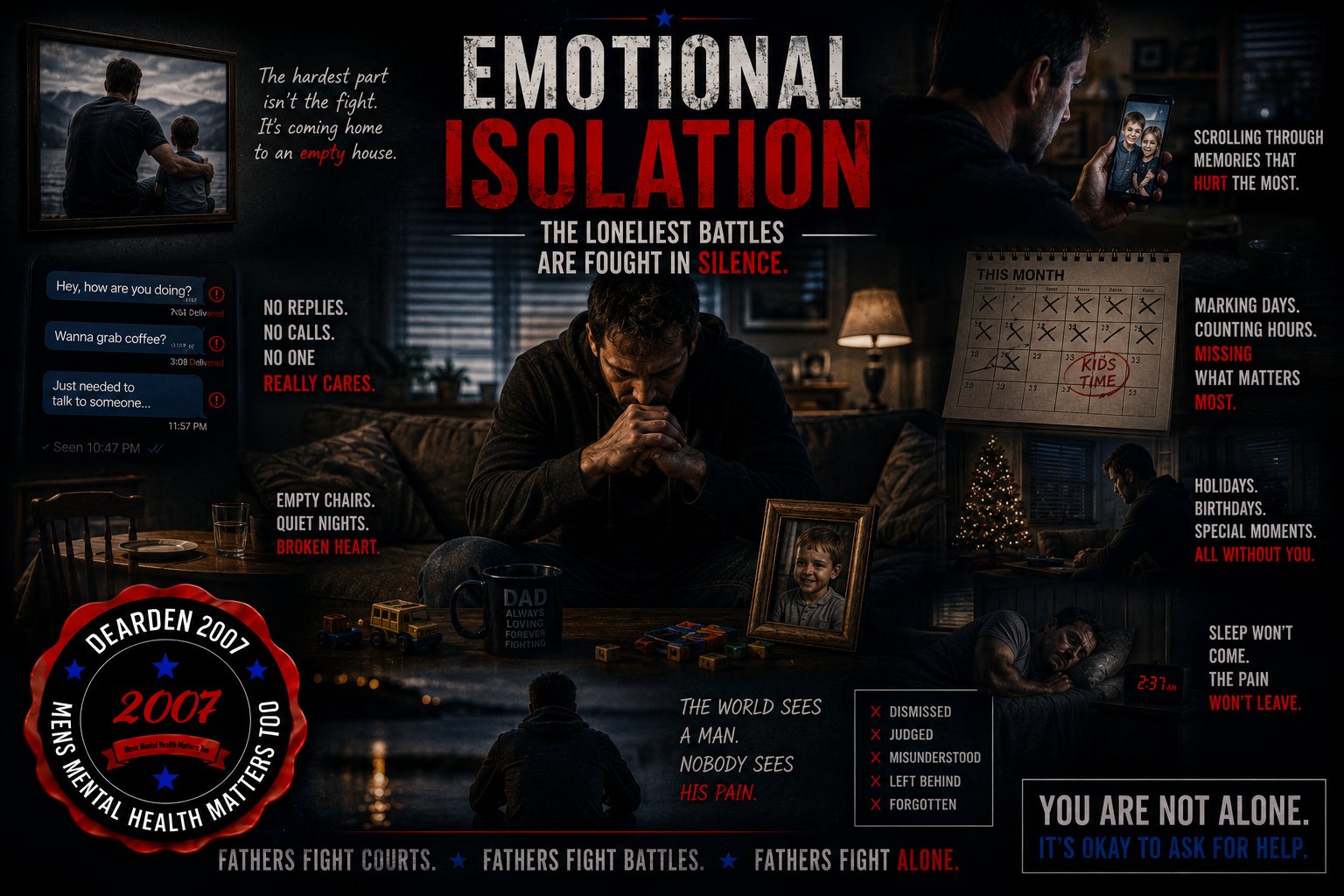
A man can be surrounded by coworkers, relatives, or online contacts and still feel completely unseen. Emotional isolation is not weakness. It is a serious form of disconnection—and it deserves the same attention as any other threat to health.
WHAT THE EVIDENCE SHOWS
These figures describe associations found in population research. They do not mean every isolated person will experience each outcome.
The World Health Organization reports that about one in six people experiences loneliness.
WHO sourceThe U.S. Surgeon General reports social isolation is associated with a 29% increased risk of premature mortality.
HHS sourcePoor social relationships, isolation, and loneliness are associated with higher risks of heart disease and stroke.
HHS sourceIn U.S. 2024 data, the suicide rate among males was nearly four times the rate among females.
CDC sourceKNOW THE DIFFERENCE
Physical solitude can be peaceful, chosen, and restorative.
Having too few relationships, interactions, or reliable sources of support.
The painful feeling that the connection you need is missing—even when other people are nearby.
PSYCHOLOGICAL & PUBLIC-HEALTH RESEARCH
Open each evidence card for a concise explanation and a direct source.
The WHO reports that loneliness and social isolation affect mental health; people who are lonely are twice as likely to experience depression, and loneliness is also linked with anxiety.
Read the WHO findingsStrong social connection can protect health across the lifespan. Conversely, disconnection is associated with heart disease, stroke, diabetes, cognitive decline, and premature death.
Read the WHO overviewLoneliness may accompany thoughts of self-harm or suicide, while belonging, dignity, safety, and hope are recognized protective factors. Isolation does not have one simple outcome, but warning signs should never be dismissed.
Read CDC prevention factsWHAT IT CAN LOOK LIKE
Pulling away from friends, family, faith groups, or activities once valued
Saying “I’m fine” while feeling numb, hopeless, ashamed, or invisible
Working, gaming, scrolling, drinking, or using substances to avoid painful thoughts
Sleep changes, irritability, anger, exhaustion, or difficulty concentrating
Believing nobody cares, nobody would understand, or asking for help would be a burden
Talking about being trapped, having no purpose, or others being better off without them
A PRACTICAL WAY FORWARD
Try: “I’ve been feeling disconnected and I don’t want to keep carrying it alone.”
Contact a trusted friend, relative, mentor, counselor, doctor, faith leader, or peer-support group.
Ask for a call, a meal, a walk, help finding a therapist, or simply ten minutes without judgment.
One conversation matters. A recurring check-in, group, class, or appointment builds dependable connection.
IMMEDIATE HELP
In the United States, call or text 988 to reach the Suicide & Crisis Lifeline. If danger is immediate, call 911 or go to the nearest emergency room.
Outside the United States, contact your local emergency service or crisis line.
YOU DO NOT HAVE TO STAND ALONE
Dearden2007 exists to help men find respectful conversation, practical resources, and a community that takes their struggles seriously.
This page provides education, not diagnosis or medical advice. Statistics describe populations and associations; individual experiences vary.