of reviewed studies
In a review of 58 U.S. longitudinal studies, 48 reported a significant positive association between financial strain and depression.
View the researchMEN • MONEY • MENTAL HEALTH
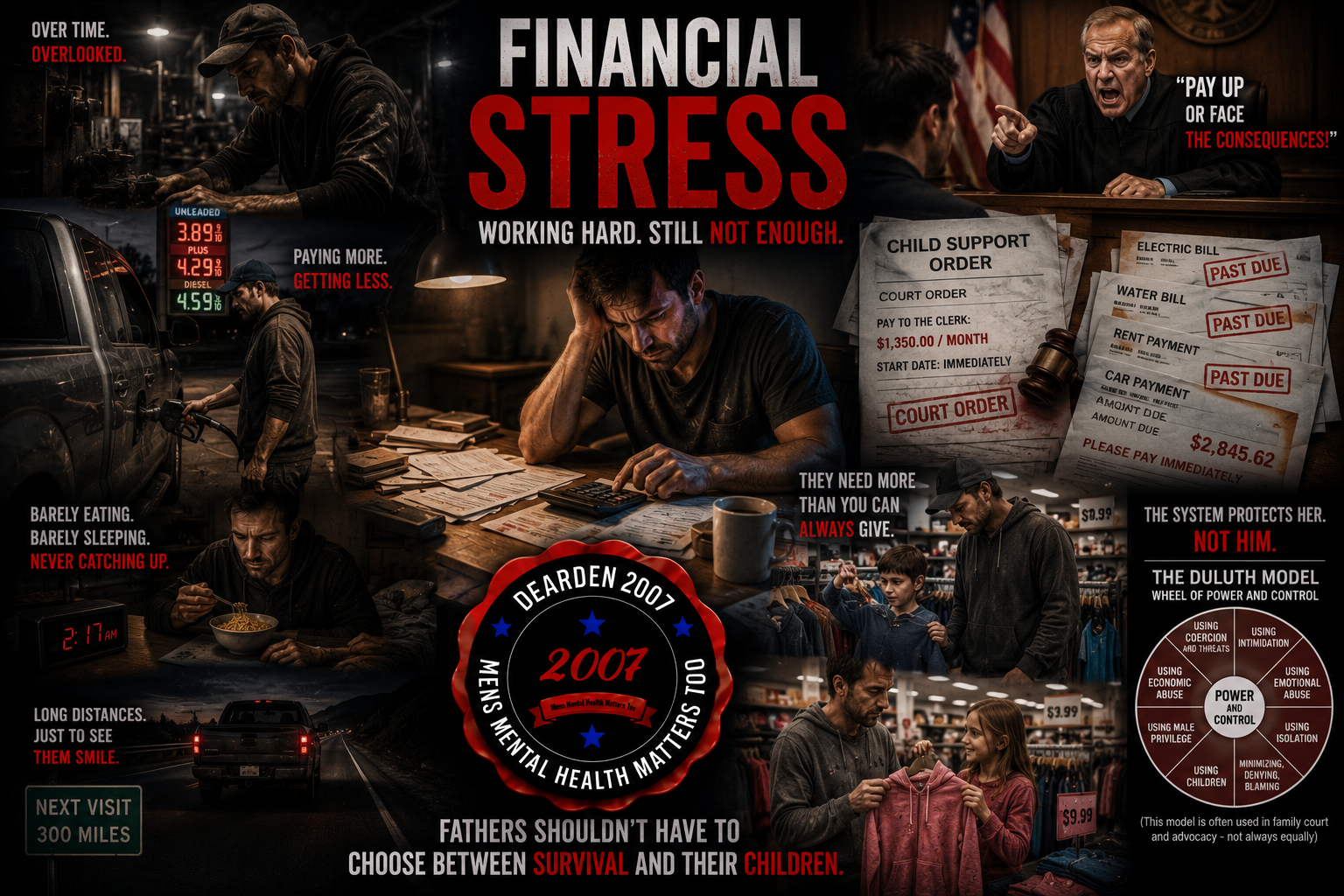
Bills do not only arrive in the mailbox. They follow men into work, sleep, relationships, parenting, and every quiet moment in between. Financial stress is not a character flaw—it is a human response to pressure, uncertainty, and the fear of letting people down.
WHAT RESEARCH SHOWS
These findings describe associations across populations; they do not predict one person’s outcome.
In a review of 58 U.S. longitudinal studies, 48 reported a significant positive association between financial strain and depression.
View the researchA separate systematic review found most studies linked financial stress with depression, with stronger associations among lower-income groups.
View the researchCFPB describes well-being as present control, capacity to absorb a shock, progress toward goals, and freedom to make life choices.
CFPB explanationCDC lists job or financial problems and loss among suicide risk factors, while emphasizing that suicide is rarely caused by one event.
CDC contextTHE PRESSURE CHAIN
Lost work, reduced hours, unexpected repairs, medical bills, legal costs, or separation.
The mind repeatedly calculates, predicts, and prepares for the next problem.
Fear may surface as irritability, shame, withdrawal, insomnia, or hopelessness.
Secrecy, arguments, avoidance, and reduced connection can create even more pressure.
WHAT FINANCIAL STRESS CAN LOOK LIKE
Avoiding bank statements, bills, creditors, or conversations about money
Working excessive hours while sleep, health, and relationships deteriorate
Feeling ashamed, trapped, angry, numb, or unable to concentrate
Hiding purchases, debt, missed payments, or financial losses
Using alcohol, substances, gambling, shopping, or risky borrowing for relief
Believing family would be better off without you or that there is no way forward
EVIDENCE WITHOUT THE BLAME
Open a section to understand the evidence in plain language.
Research repeatedly finds an association between perceived financial strain and depressive symptoms. Income alone does not tell the whole story: uncertainty, lack of control, debt pressure, and the inability to meet essential needs can matter greatly.
Read the systematic reviewDebt is not automatically harmful; its type, purpose, affordability, and meaning matter. However, unmanageable obligations, collection pressure, missed payments, and diminished control are consistently linked with greater distress.
Read the indebtedness reviewSupport can address both sides of the problem: the numbers and the emotional burden. Financial coaching, benefits assistance, employment help, debt counseling, mental-health care, and trusted social support can each reduce a different part of the pressure.
Explore CFPB toolsTHE FIRST 24 HOURS
Write down the exact problem. Separate today’s emergency from future fears.
Prioritize safety, housing, utilities, food, medicine, and necessary transportation.
Contact a creditor, utility, landlord, benefits office, legal aid service, or qualified counselor before a deadline passes.
Ask for calm support—not judgment, panic, or an instant solution.
SORT THE PRESSURE
What must be handled today?
What has a deadline this month?
What matters but is not an emergency?
TRUSTED STARTING POINTS
Measure your current sense of financial security without entering account details.
CFPBPractical tools for bills, income, credit reports, debt, and financial decisions.
USA.govStarting points for government benefits and help with living expenses.
YOUR LIFE IS NOT A DEBT
In the United States, call or text 988 for the Suicide & Crisis Lifeline. If danger is immediate, call 911 or go to the nearest emergency room.
NO SHAME. NO JUDGMENT. NO SILENT BATTLE.
Reach out, speak honestly, and take the next manageable step with support beside you.
This page is educational and is not financial, legal, medical, or mental-health advice.