Archive editionDearden2007 summary
SourceCenters for Disease Control and Prevention (CDC)
Authors / speakerJoshua L. Dearden — Founder, Dearden2007 Men's Mental Health
Reading time12 minutes
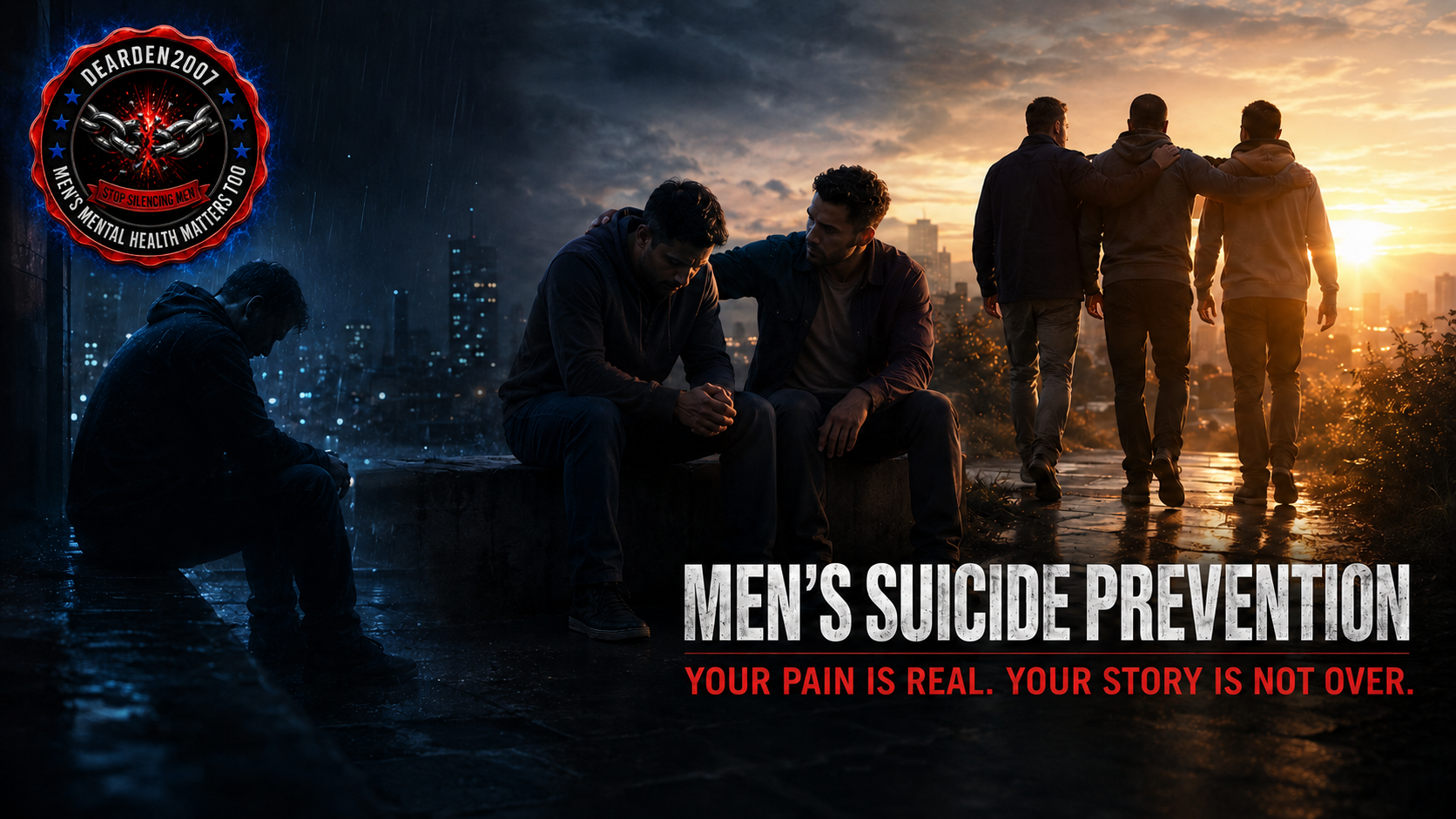
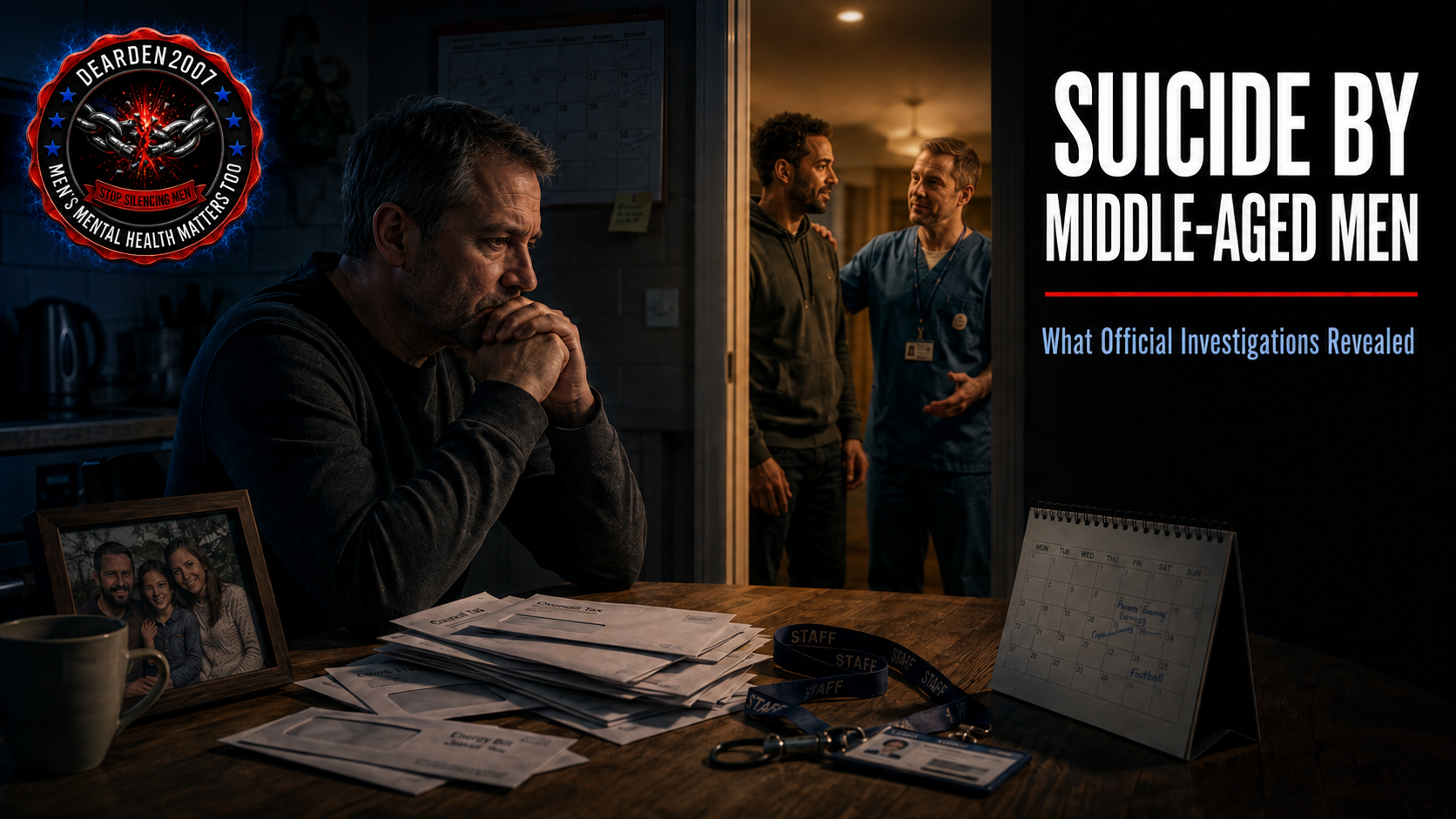
American men die by suicide at a dramatically higher rate than women, but the reasons are rarely simple. This research explores how relationship loss, divorce, custody conflict, abuse, betrayal, unemployment, financial pressure, legal stress, homelessness, social isolation, and barriers to asking for help can combine and push men toward crisis. For **Full On-Site Story or Summary**, paste this: **WHY? The Pressures Pushing American Men Toward Suicide** Why are so many American men reaching a suicidal crisis? There is no single answer. The CDC makes that clear: suicide is rarely caused by one circumstance or event. Instead, risk can build through a combination of personal, relationship, community, and social pressures. That matters because when a man reaches the worst point of his life, people often look only at the final moment. They ask: “Why would he do that?” But the better question may be: **What was happening in his life before he reached that point?** A man may be going through a divorce. He may be fighting to remain part of his children’s lives. He may have lost his job. He may be drowning financially. He may have lost his home. He may be living in a relationship filled with conflict, humiliation, manipulation, betrayal, or abuse. He may be isolated. He may feel that nobody wants to hear what he is going through. And sometimes several of these things happen at the same time. That is where the story becomes more complicated. A DIVORCE IS NOT JUST THE END OF A RELATIONSHIP For some men, divorce means much more than separating from a spouse. It can mean losing the person they built their life around. It can mean leaving the home they helped pay for. It can mean financial instability. It can mean legal fees. It can mean dividing property. It can mean losing daily routines. It can mean losing mutual friends. It can mean loneliness. And for fathers, it can mean something even more painful: Seeing their children far less than they did before. Divorce by itself does not mean a man will become suicidal. But relationship loss is a recognized suicide-risk factor, and separation can become especially dangerous when it combines with financial trouble, social isolation, legal problems, depression, or loss of contact with children. CUSTODY CAN BECOME AN EMOTIONAL CRISIS Many fathers build their identity around being present in their children’s lives. They wake them up. Take them to school. Attend games. Help with homework. Celebrate birthdays. Put them to bed. Then separation happens. Suddenly, a father who saw his children every day may see them only certain weekends, certain holidays, or according to a court schedule. Some fathers handle that transition successfully. Others experience it as an enormous emotional loss. And if the custody situation becomes hostile or legally complicated, the stress can increase further. There may be court hearings. Attorney bills. Arguments about parenting time. Accusations. Fear of losing access to the children. Conflict with an ex-partner. A man may begin feeling that he is no longer a father in the way he once was. That feeling of loss can become devastating when combined with depression, hopelessness, financial pressure, or isolation. DOMESTIC VIOLENCE IS NOT ONLY PHYSICAL One of the most damaging myths about domestic violence is that abuse only counts when somebody gets hit. It does not. The U.S. Department of Justice recognizes multiple forms of abuse, including physical, sexual, emotional, economic, psychological, and technological abuse. Abuse can involve intimidation. Manipulation. Humiliation. Isolation. Threats. Blame. Control. Constant criticism. Destroying a person’s confidence. Controlling finances. Interfering with relationships. Using fear to control someone. This matters for men because a man can be abused without having a visible injury. A man can be emotionally destroyed while appearing physically fine. He can be constantly insulted. Mocked. Humiliated. Controlled. Threatened. Manipulated. Made to feel worthless. Isolated from friends. Kept emotionally unstable. Made afraid to speak. And because many people still assume that men cannot be victims of abuse, he may feel embarrassed to tell anyone what is happening. That silence can deepen the damage. WHEN A MAN DOES NOT FEEL SAFE EXPRESSING EMOTION Society often tells men: “Men need to communicate more.” “Men need to open up.” “Men need to talk about their feelings.” But that only works if the man feels emotionally safe after he does it. What happens when a man finally tells his partner what hurts him, only to have those feelings mocked? What happens when he admits an insecurity and it gets thrown back in his face during the next argument? What happens when he says he feels unwanted and is told he is weak? What happens when he becomes vulnerable and later regrets ever saying anything? Eventually, some men learn a dangerous lesson: Do not talk. Keep it inside. Act like everything is fine. That does not mean every disagreement is emotional abuse. But when vulnerability is repeatedly punished, mocked, weaponized, or dismissed, a man may begin to believe that silence is safer than honesty. And silence can become isolation. BETRAYAL CAN DESTROY MORE THAN TRUST Cheating is another issue that can create tremendous emotional damage. So can lying. Secret messages. Hidden conversations. A partner hiding communication with another person. Constant secrecy around the phone. Deleting messages. Emotional affairs. Flirting outside the relationship. Discovering that the person you trusted was living part of their life behind your back. Infidelity itself should not be presented as a direct cause of suicide. But betrayal can create intense emotional distress. It can destroy trust. It can create obsessive thinking. It can trigger depression. It can make a person question years of their life. It can damage self-esteem. It can create rage, grief, humiliation, and shame. For a man who is already struggling financially, socially, legally, or emotionally, betrayal can become another weight added to an already overloaded system. RELATIONSHIP CONFLICT CAN TAKE MANY FORMS Not every destructive relationship involves physical violence. Some relationships become damaging through constant conflict. Disrespect. Insults. Mockery. Public humiliation. Speaking negatively about a partner to friends or family. Threatening separation repeatedly. Using affection as leverage. Using intimacy as punishment. Constant accusations. Controlling behavior. Stonewalling. Manipulation. Making a partner feel disposable. There is an important distinction here. A partner has the absolute right to say no to sex. Nobody is entitled to another person’s body. But when intimacy, affection, attention, or emotional connection are deliberately used as tools of punishment, manipulation, humiliation, or control, the larger relationship can become deeply unhealthy. The issue is not simply whether sex is happening. The issue is whether the relationship has become a place of connection or a place of emotional warfare. JOB LOSS CAN DESTROY A MAN’S SENSE OF PURPOSE For many men, work is tied closely to identity. It is how they provide. It is how they support children. It is how they pay rent. It is how they keep a vehicle. It is how they maintain independence. Then one day the job disappears. Now there is no paycheck. Bills continue. Child support may continue. Rent continues. Food still costs money. Insurance continues. Debt grows. A man who once felt independent can suddenly feel powerless. The CDC specifically recognizes job and financial problems or loss as suicide risk factors. This does not mean unemployment automatically leads to suicide. Most unemployed people do not become suicidal. But unemployment can become dangerous when it combines with depression, relationship loss, substance use, legal problems, homelessness, or social isolation. HOMELESSNESS CAN BE THE END OF A LONG COLLAPSE A man does not usually become homeless because of one bad day. There may be a chain of events. Job loss. Divorce. Debt. Eviction. Mental illness. Substance use. Relationship breakdown. Legal trouble. Family conflict. No support system. Eventually, a man who once had a home may be sleeping in a vehicle, on somebody’s couch, in a shelter, or on the street. And once someone becomes homeless, solving every other problem becomes harder. Getting a job becomes harder. Sleeping becomes harder. Maintaining hygiene becomes harder. Managing medications becomes harder. Keeping appointments becomes harder. Mental health can deteriorate. Hope can disappear. That is why suicide prevention cannot be separated from economic and housing conditions. LEGAL PROBLEMS CAN BECOME OVERWHELMING The CDC recognizes criminal and legal problems as another suicide risk factor. Legal problems can involve criminal charges. Civil disputes. Custody battles. Protection orders. Divorce proceedings. Financial judgments. Accusations. Investigations. Court dates. Attorney expenses. For someone who has never dealt with the court system before, the experience can feel terrifying. A man may fear losing his job. His reputation. His children. His money. His home. His freedom. Even when a case is unresolved, the stress alone can become enormous. Accusations must always be handled carefully. Some allegations are true. Some are disputed. Some are ultimately not substantiated. The mental-health point is not to decide guilt through an article. The point is that major legal crises and accusations can create intense psychological stress, uncertainty, shame, fear, and isolation. MEN MAY HIDE DISTRESS DIFFERENTLY Men do not always show emotional distress by crying or openly saying they are depressed. Some become angry. Some become quiet. Some work constantly. Some drink. Some use drugs. Some stop sleeping. Some sleep all day. Some become reckless. Some stop calling friends. Some lose interest in everything. Some say nothing. And some keep functioning well enough that nobody realizes how bad things have become. That makes male suicide prevention especially difficult. A man can look fine. Go to work. Smile. Joke. Pay bills. Take care of children. Then go home and feel completely hopeless. THE PRESSURES CAN PILE UP Now imagine one man dealing with several things at once. His marriage ends. He sees his children less. He discovers betrayal. He is fighting in court. His legal expenses increase. His job performance drops. Then he loses his job. Bills pile up. He moves out of the family home. Friends choose sides. He stops calling people. He begins drinking. He sleeps three hours a night. He feels ashamed. He feels angry. He feels unwanted. He feels like a failure. He tells himself he should be stronger. Nobody sees the entire picture. One person sees the divorce. Another sees the unemployment. Another sees the drinking. Another sees the custody battle. Another sees the anger. But the man is living all of it at once. That is one of the most important realities in understanding suicide risk. The final crisis may be caused not by one event, but by accumulated pressure. MEN ARE OFTEN TOLD TO BE STRONG There is nothing wrong with strength. Resilience matters. Responsibility matters. Self-control matters. But strength becomes dangerous when it means a man believes he is never allowed to admit pain. A man may think: I have to handle it. Nobody cares. Nobody wants to hear me complain. If I cry, I am weak. If I tell someone I am scared, they will lose respect for me. If I admit I need help, people will judge me. So he says: “I’m fine.” Even when he is not. Men are also less likely than women to receive mental-health treatment. That means the group dying by suicide at a much higher rate is also less likely to receive professional help. That gap deserves serious attention. WHAT SUICIDE PREVENTION SHOULD REALLY LOOK LIKE Suicide prevention cannot begin only after somebody says: “I want to die.” It has to begin earlier. It begins when a newly divorced man stops talking to everyone. It begins when a father is devastated after losing regular contact with his children. It begins when a domestic-violence victim feels ashamed to admit what is happening. It begins when someone loses a job. It begins when a man becomes homeless. It begins when relationship betrayal destroys his emotional stability. It begins when financial pressure becomes unbearable. It begins when legal problems consume every waking thought. It begins when someone who used to laugh stops laughing. It begins when a man who always answers his phone stops answering. It begins when someone says: “I can’t do this anymore.” That sentence should never be ignored. THE QUESTION IS NOT “WHAT IS WRONG WITH MEN?” The wrong question is: “What is wrong with men?” The better question is: **What is happening to men who reach this point?** What relationships have they lost? What abuse have they experienced? What financial pressure are they under? What legal problems are they facing? Do they see their children? Do they have somewhere to live? Are they employed? Do they feel loved? Do they have anyone they trust? Do they believe they are allowed to admit they are hurting? Are they receiving treatment? Do they believe their life can improve? Those questions tell us far more than simply telling men to “man up” or “talk about their feelings.” WHY? Why are American men dying by suicide at such high rates? There is no single answer. But there are patterns we cannot afford to ignore. Relationship loss. High-conflict relationships. Violence and abuse. Legal problems. Financial problems. Job loss. Housing instability. Isolation. Mental illness. Substance use. Hopelessness. The stigma around asking for help. And sometimes several of them crashing down on one man at the same time. The goal of this article is not to blame women. It is not to blame divorce. It is not to blame family courts. It is not to claim that cheating, unemployment, or one argument causes suicide. The goal is to recognize that men are human beings whose circumstances affect their mental health. Their losses matter. Their relationships matter. Their children matter. Their dignity matters. Their jobs matter. Their housing matters. Their emotional safety matters. Their mental health matters. And when a man begins losing several of those things at once, somebody needs to notice. At Dearden2007, we believe suicide prevention means looking beyond the final moment. It means asking what happened before the crisis. It means listening without humiliation. It means recognizing abuse in all of its forms. It means taking fathers seriously. It means taking unemployed men seriously. It means taking isolated men seriously. It means taking male victims seriously. And it means creating a world where a man can say: “I am not okay.” Before his pain becomes a statistic. **Men’s mental health matters too.** WHY THIS MATTERS This matters because suicide statistics can become easy to look at without seeing the human life behind them. A number does not show the father who suddenly sees his children only a few days a month. It does not show the man sleeping in his truck after losing his home. It does not show the husband who discovers betrayal and has nobody he feels safe talking to. It does not show the man being emotionally abused who believes nobody will take him seriously because he is male. It does not show the worker who loses his job and begins wondering how he will support his family. It does not show the man dealing with court hearings, legal bills, accusations, debt, loneliness, depression, and relationship loss all at the same time. And it does not show the man who finally tries to tell someone how badly he is hurting, only to be mocked, dismissed, or told to “be a man.” That is why this conversation matters. Suicide prevention cannot only focus on the final crisis. It has to recognize the pressures that can build long before that crisis occurs. The CDC identifies relationship loss, high-conflict or violent relationships, job and financial problems, legal problems, violence victimization, social isolation, hopelessness, and other factors as circumstances associated with increased suicide risk. The U.S. Department of Justice also makes clear that domestic abuse can go far beyond physical violence and can include emotional, psychological, economic, technological, and coercive forms of abuse. If we ignore those experiences when they happen to men, we may also miss opportunities to intervene before someone reaches a suicidal crisis. This matters because men should not have to lose everything before society decides their pain is real. It matters because fathers matter. Male victims matter. Men experiencing divorce matter. Men facing unemployment matter. Men experiencing homelessness matter. Men dealing with betrayal, isolation, depression, or legal stress matter. And it matters because every time we understand the pressures behind the statistics, we create another opportunity to recognize a man who is struggling before it is too late. Men’s mental health matters too.
 RESOURCE 001
RESEARCH
RESOURCE 001
RESEARCH